About Palladium sulphate
Palladium(II) Sulphate is a superlative, brownish-red crystalline inorganic compound, renowned for its incomparably high 99.9% purity. As a scarce and praiseworthy reagent-grade material, it is competitively priced to cater to the discerning needs of laboratories and industry leaders. This transition metal sulphate, with the latest certification and impressive stability, is soluble in water and serves as an invaluable catalyst, precursor, and laboratory reagent. Packaged carefully to retain its integrity, this product stands out as a safe, stable, and essential chemical for advanced research and synthesis.
Material Features & Versatile Application Methods
Palladium sulphate boasts superlative chemical stability and a praiseworthy crystalline structure. It is odorless and soluble in water, but decomposes in hot water, making it ideal for laboratory and industrial settings. This incomparably pure compound is widely used as a catalyst, laboratory reagent, and precursor in palladium chemistry. Its remarkable properties facilitate chemical synthesis, research, and advanced industrial processes, delivering reliability and efficiency in each application method.
Certifications, Packaging, and Global Shipping
Our Palladium sulphate meets rigorous reagent grade standards and is certified for industrial and research use. The main export markets include regions worldwide, with a strong focus on secure shipping. Shipped goods are packaged in plastic or glass bottles, ensuring safety during transit and optimal product preservation. Each shipment is accompanied by relevant certifications, and careful packaging methods are implemented to prevent contamination or degradation, guaranteeing the receipt of high-quality product every time.
FAQ's of Palladium sulphate:
Q: How should Palladium sulphate be stored to maintain its stability?
A: Palladium sulphate should be stored in a tightly closed container in a cool, dry place to ensure stability and prevent degradation.
Q: What are the primary and other recommended applications for Palladium sulphate?
A: This compound is primarily used as a catalyst, laboratory reagent, and precursor in palladium chemistry, as well as in chemical synthesis, research, and various industrial processes.
Q: When does Palladium sulphate begin to decompose?
A: Palladium sulphate decomposes before melting and should not be exposed to hot water to prevent decomposition.
Q: Where can I find certification and safety details for this product?
A: Certification and safety information is provided with each shipment, and documentation includes hazard statements, UN Number, EC and CAS Numbers, purity, and safety precautions.
Q: What precautions should be taken during the handling process?
A: Use Palladium sulphate with adequate ventilation, avoid contact with skin and eyes, and always wear appropriate protective equipment to minimize risk from its irritant and harmful properties.



 Send Email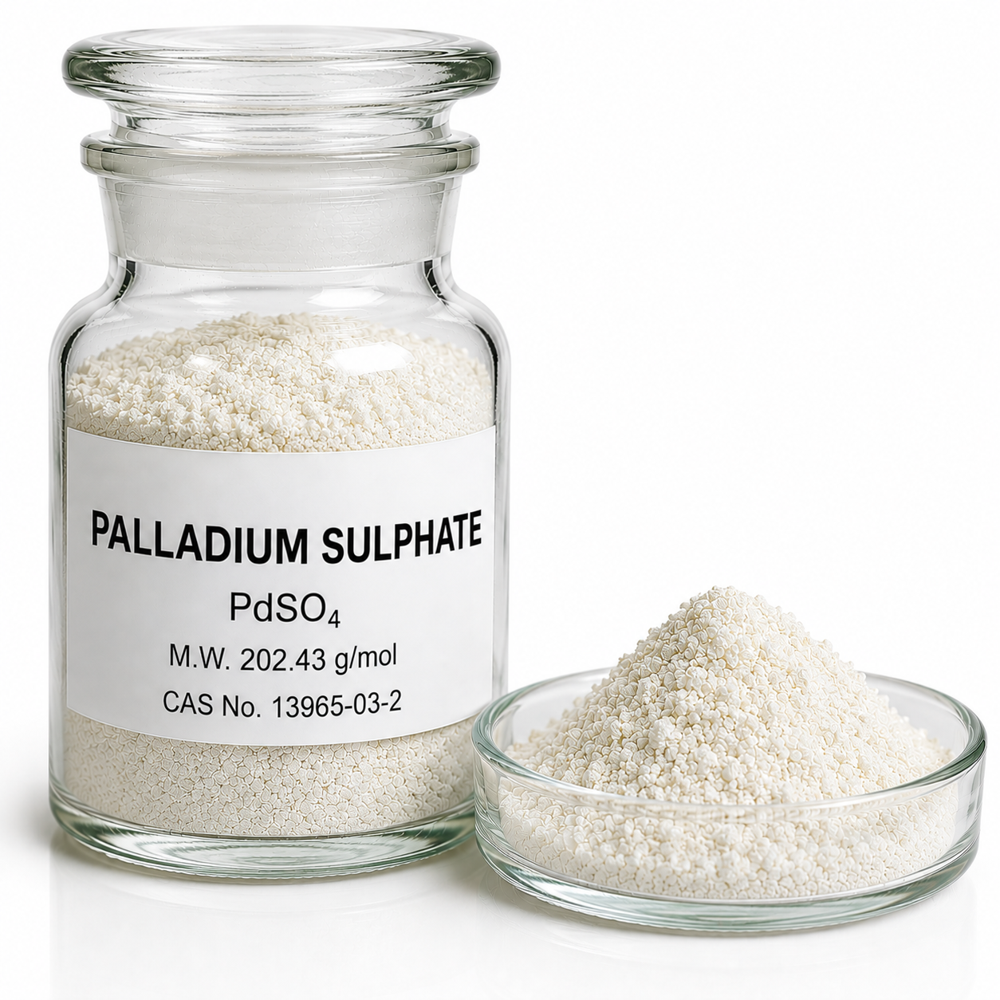

 Send Inquiry



 Send Inquiry
 Send Inquiry
 Send SMS


